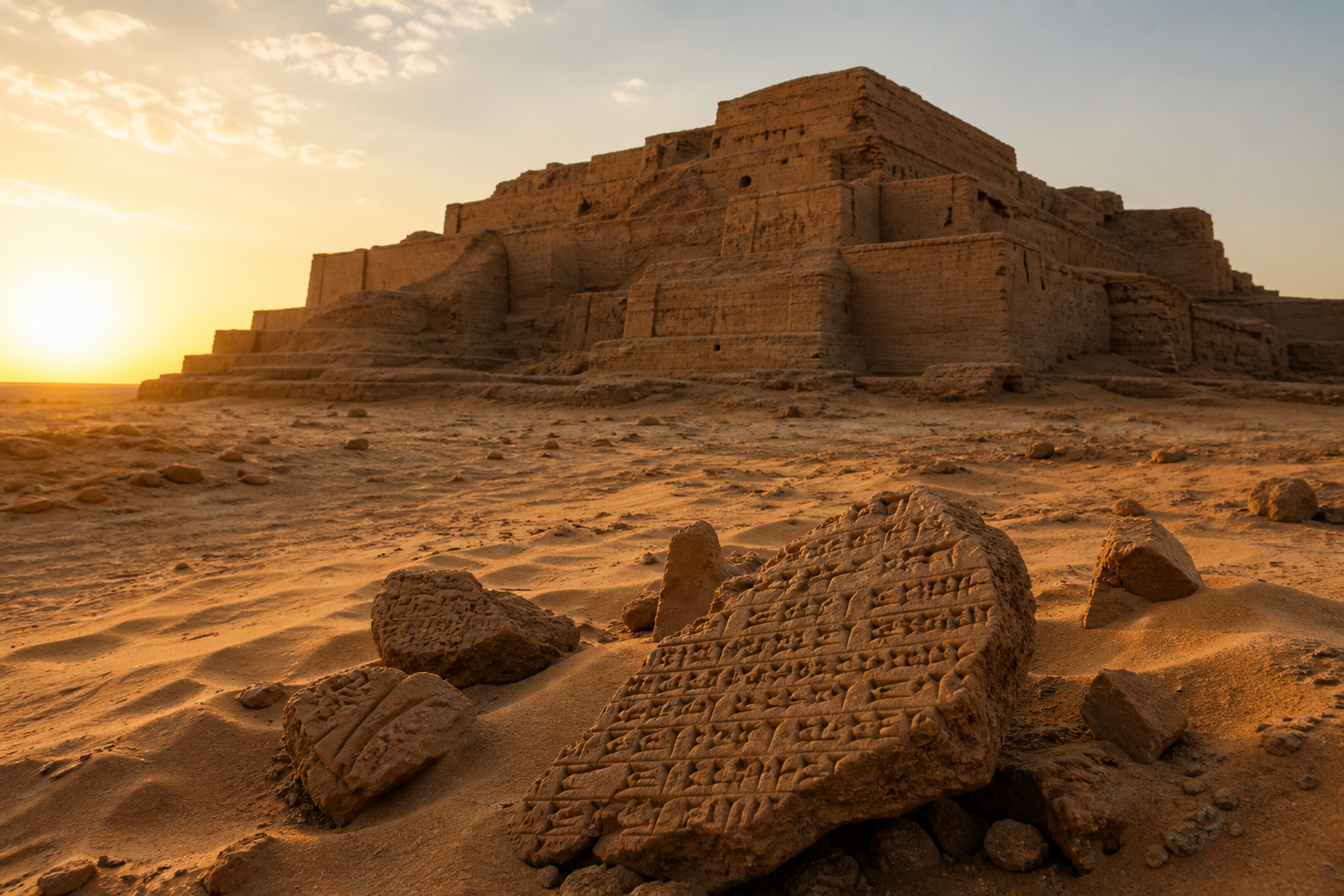
The Level XVIII temple platform
You are standing at the edge of a freshwater marsh in southern Mesopotamia, around 5500 BCE.
It is dusk. The heat is going out of the day, and the reed beds have gone quiet.
Under your feet is a dune of clean sand. No one has ever lived here before you.
Ahead of you stands a single small room of mud brick — about twelve feet by fifteen. You could cross it in five steps.
Inside, against the wall: a low podium of mud brick. An altar.
Behind it, a niche recessed into the wall.
The niche was made to hold an image — a statue of whoever this room belongs to.
On and around the altar there are fish bones, and ash.
Someone has burned offerings of fish here — and not once: again and again, floor above floor.
The fish came out of this marsh — the sweet water at the settlement’s edge.
Smoke is rising off the altar now, thin and steady, drifting through the doorway past you toward the first stars.
Nobody here can write. The first written words are still some two thousand years away.
So you cannot ask them what they call this building, or who the niche is for. Neither can we.
Much later, the people of this land will say a god lived here — Enki, lord of the sweet water under the earth — and that this was the first city, founded by the gods before the flood.
Maybe they remembered this place. Maybe they invented a memory.
What is certain is the ground itself: people will rebuild on this exact spot — room over room, temple over temple, eighteen times, for the next two thousand years.
You are standing in the earliest building in Mesopotamia that archaeology is willing to call a temple.
Behind you the marsh goes dark. Smoke, fish, river mud, stars. Whatever has begun here is not going to stop.
← all scenes · next rooms (Qafzeh, Göbekli Tepe, Anyang) open once their narrations pass line-by-line licensing.